
International Circuit
US-China summit sees no breakthrough on semiconductor dispute
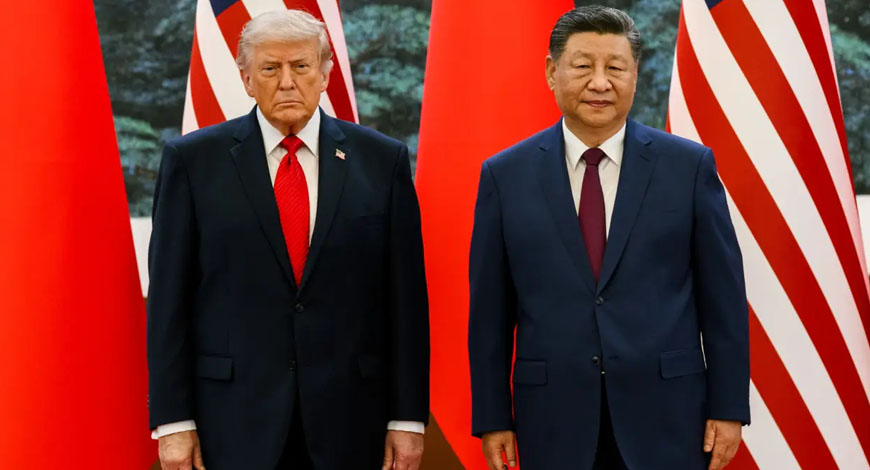
The summit between US President Donald Trump and Chinese President Xi Jinping concluded on the 15th, but the issue of semiconductor export controls—a core aspect of the US-China technology rivalry—was not addressed. Although NVIDIA CEO Jensen Huang accompanied President Trump during his visit to Beijing, raising expectations that exports of NVIDIA’s H200 AI chips for the Chinese market would resume, those predictions proved unfounded.
US Trade Representative Jamieson Greer stated in a Bloomberg interview on the 15th regarding the content of the US-China summit, “Semiconductor export controls were not a major topic of discussion,” adding, “Whether to purchase (H200 chips) is a sovereign decision for China.”
In December of last year, President Trump approved exports of NVIDIA’s H200 chips for the Chinese market. About 10 Chinese companies, including Alibaba, Tencent, and ByteDance, obtained approvals, but no deliveries have occurred. While the US granted approval, the Chinese government has not permitted domestic companies to purchase NVIDIA chips. President Trump remarked on the plane that day, “They (China) do not approve (imports) because they want to develop (AI chips) themselves.” In effect, even though the US government allowed exports of NVIDIA’s H200 chips to China, the Chinese side rejected the offer, stating, “We will use domestically produced AI chips instead of NVIDIA in the future.”
NVIDIA initially held a 95% share of the Chinese AI chip market. However, due to stringent US government regulations, exports of NVIDIA’s AI chips to the Chinese market have been significantly restricted. Although NVIDIA developed the H200 AI chip for the Chinese market, the Chinese government has limited imports of the H200 to encourage domestic chip production.
Chinese companies are rapidly filling the gap left by NVIDIA. Huawei, leveraging its latest AI processor Ascend 950PR, which began mass production in March, plans to increase its AI chip sales to US$12 billion (approximately 18 trillion Korean won) this year—a 60% increase from the previous year. SMIC, the largest Chinese foundry (semiconductor contract manufacturer), also announced that it will add 40,000 wafers per month to its production capacity by the end of this year to meet growing demand from Huawei. The Chosun










You must be logged in to post a comment Login