
Headlines of the Day
Semicon Mission 2.0 set to prioritise memory chips
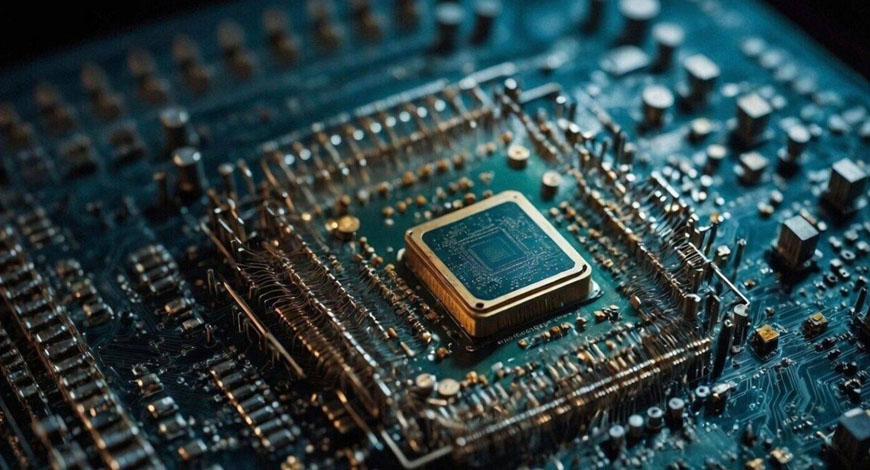
India’s semiconductor ambitions are taking a sharper, more strategic turn. The India Semiconductor Mission’s second phase — ISM 2.0 — will prioritise advanced memory packaging, with a specific focus on High Bandwidth Memory. The move signals a deliberate push to embed India into one of the most critical and contested segments of the global chip supply chain.
ISM 1.0, launched in 2021, was broadly aimed at building semiconductor manufacturing, packaging and design capacity. The ₹1-lakh crore second phase, while publicly framed around establishing a full semiconductor ecosystem spanning design, equipment, materials and research and development, will in practice fast-track investment applications related to HBM production.
The urgency is driven by a confluence of factors. HBM is the memory architecture of choice for AI data centres, offering massive high-speed data processing capabilities that conventional memory simply cannot match. Prices have surged amid a multi-year global demand supercycle, as AI infrastructure buildout accelerates worldwide. At the same time, tightening technology controls by major economies and the risk of sudden economic shocks have added a geopolitical dimension to what was once a purely commercial calculation. At this juncture, it is evident this technology is crucial for the AI ecosystem. India must enter the manufacturing value chain.
The challenge is formidable. HBM manufacturing is heavily concentrated — SK hynix and Samsung together controlled nearly 79% of global revenue share as of the fourth quarter of 2025, with Micron holding the remaining 21%, according to Counterpoint Research.
India’s most visible foothold in memory manufacturing is Micron’s $2.5-billion plant in Sanand, Gujarat, inaugurated last month. The facility, described as one of the world’s largest single-floor assembly and test cleanrooms, converts imported DRAM and NAND wafers into finished chips and SSDs. Micron expects to assemble and test tens of millions of chips there in 2026, scaling to hundreds of millions by 2027. Electronics minister Ashwini Vaishnaw said last week that the plant will account for roughly 10% of Micron’s global memory output.
However, the Sanand facility does not currently plan to host HBM manufacturing — a gap that experts say matters significantly, given that most of the value in the memory supply chain is migrating towards the production stage rather than assembly and testing. ISM 2.0’s stated intent to prioritise HBM is therefore as much an acknowledgement of where India currently stands as it is a signal of where it intends to go.
CT Bureau












You must be logged in to post a comment Login