
Company News
Rapidus races TSMC and Samsung in 1nm chip foundry
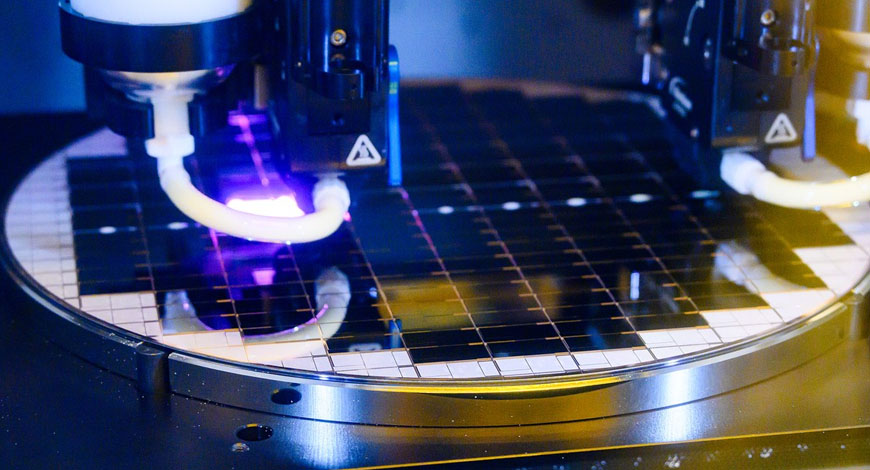
Japanese foundry company Rapidus has announced it will accelerate the development of its 1-nanometer (nm) process—a feat currently possible for only a few companies worldwide, including Samsung Electronics and TSMC—and reduce the gap with the leaders to within six months.
If the company succeeds in narrowing the technology gap as planned, it could potentially alter the current two-horse race where Samsung Electronics is chasing the front-runner, TSMC. This is because TSMC is reportedly unable to accept additional orders until next year, and Samsung is also seeing a continuous stream of orders from Big Tech, creating an overall supply-demand imbalance in the foundry market.
According to market research firm TrendForce on March 31, Japanese foundry company Rapidus is reportedly aiming to narrow its technology gap with TSMC in the 1-nanometer process to about six months.
Kazunari Ishimaru, Chief Technology Officer (CTO) of Rapidus, recently stated, “Our goal is to reduce the technology gap with TSMC to the level of half a year,” expressing a strong determination to quickly catch up in the competition for cutting-edge processes.
Rapidus is an advanced foundry project established with the participation of the Japanese government and major corporations such as Toyota and Sony, with the goal of securing next-generation semiconductor production technology. It is referred to as the ‘Japanese version of TSMC’, as it is co-developing sub-2nm process technology based on a partnership with IBM and is backed by large-scale support from the Japanese government.
The company is characterized by its fast-paced approach, pursuing research and development (R&D) and mass production simultaneously, unlike conventional foundries.
Opinions in the industry are divided on whether Rapidus can rapidly close the technology gap in a short period.
However, considering the full-scale, state-led support and its structure of global corporate cooperation, it is highly likely to emerge as a major variable in the global foundry market.
Rapidus has presented a roadmap to begin development of a 1.4-nanometer process in 2026, start 2-nanometer mass production in 2027, and achieve 1-nanometer mass production in 2029. It plans to begin producing 2-nanometer test chips by the end of this year.
TSMC is expected to begin mass production of its 1-nanometer process in the second half of 2028, following trial production in 2027. Samsung Electronics has set a goal to enter the 1-nanometer range in 2029.
Rapidus’s challenge could also pose a threat to Samsung Electronics. The current global foundry market is structured with TSMC in the lead, pursued by Samsung Electronics.
According to market research firm Counterpoint Research, as of the fourth quarter of last year, TSMC held a 72% share of the global foundry market (by revenue), followed by Samsung Electronics with 7%.
Samsung Foundry is raising expectations for a return to profitability after securing chip foundry orders from major Big Tech companies such as Tesla, Qualcomm, and Nvidia.
An industry official commented, “It will not be easy for Rapidus to establish a mass production system on the scale of TSMC and Samsung Electronics in the short term,” adding, “The speed of its technological catch-up and its ability to secure customers will be key variables.” BusinessKorea












You must be logged in to post a comment Login