
Headlines of the Day
India’s semiconductor ecosystem ready for reduced govt support
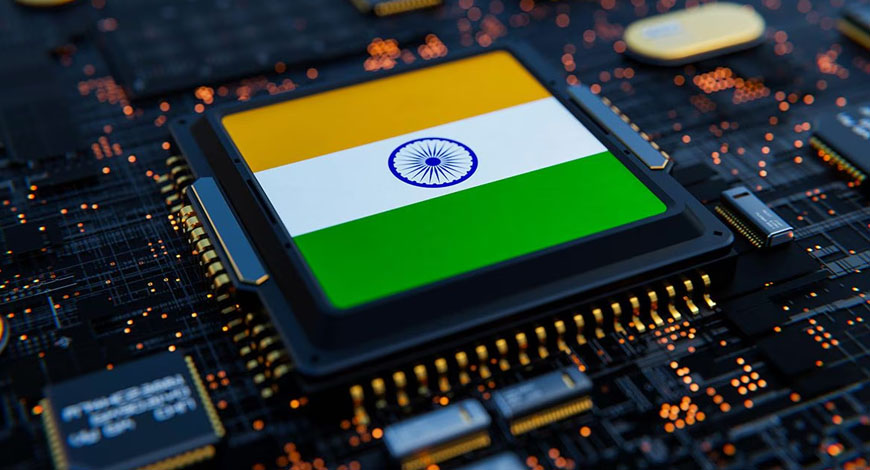
India’s semiconductor ecosystem is now mature enough to operate with lower levels of government support, S Krishnan, Secretary, Ministry of Electronics and Information Technology (MeitY), said, as the government prepares to roll out the second phase of its semiconductor mission.
Krishnan said the government would take a more targeted approach to incentives under the proposed India Semiconductor Mission (ISM) 2.0, with support varying according to the strategic importance of different projects. He also pointed to growing support from state governments as a factor that would reduce the need for the Centre to provide the same level of assistance as it did under the first phase.
“I think the ecosystem is ready,” Krishnan said.
He said the overall support available to semiconductor projects should be assessed by considering both central and state government incentives.
“Even last time, it was not 50% of the full cost of the project. There were certain elements of the cost which were left out,” he said.
Krishnan added that the role of state governments had become clearer since the launch of the first phase of the semiconductor mission.
“At that stage, it was not clear what support the state governments would provide us. Now we know clearly that state governments also provide support. So, cumulatively, I think there’s a fair amount of support,” he said.
Support to expand beyond startups and MSMEs
Under ISM 2.0, the government is also widening the scope of support beyond startups and small businesses to include larger Indian companies looking to build capabilities in the semiconductor sector.
Krishnan said the government was considering multiple mechanisms, including equity participation and co-investment structures, to support such companies.
“We are expanding the scope beyond just startups and MSMEs, which was what was done under Phase 1 of DLI, to include Indian companies and larger Indian companies as well, which want to work in this space,” he said.
The government is also looking at structures through which companies could return or share the benefits of the support they receive.
“We have multiple mechanisms of support, including equity, where it comes in the form of co-investment when they raise money from whitelisted funds,” Krishnan said.
He added that some support could also be structured through royalty payments.
“There are structures which we are putting in place for that,” he said.
Government to prioritise strategically important semiconductor projects
The second phase of the semiconductor mission is expected to adopt a more graded approach to government incentives, with higher support directed towards areas considered strategically important.
Krishnan said the government was “clearly signalling the higher-priority items” as it determines where greater support is required.
The level of support could also decline as the domestic ecosystem expands. Once more assembly, testing, marking and packaging (ATMP) and outsourced semiconductor assembly and test (OSAT) facilities using conventional or legacy technologies are established, the government may not need to provide incentives at the same level, he said.
“We also recognise that once the ecosystem builds, and there are ATMPs and OSATs with conventional or legacy technology, then more of them will come in. So, it is not that we necessarily have to provide incentives at the same level,” Krishnan said.
ISM 2.0 gets ₹1.27 lakh crore outlay
The Union Cabinet has approved an outlay of ₹1.27 lakh crore for ISM 2.0, significantly higher than the ₹76,000 crore allocation for the first phase.
The second phase has a 10-12 year horizon and is expected to attract investments of nearly ₹4 lakh crore over its lifetime. The government expects the programme to generate semiconductor production worth around ₹2 lakh crore and drive exports of approximately ₹1 lakh crore.
Launched in December 2021, the India Semiconductor Mission aims to establish India as a global hub for semiconductor manufacturing and design while reducing the country’s dependence on imported chips.
Electronics and IT Minister Ashwini Vaishnaw has said several large companies are interested in participating in the design-linked incentive scheme. While startups will receive grant-based support, large companies are expected to be offered a royalty-based incentive framework.
Vaishnaw has also said Tata’s semiconductor facility in Dholera is on track to begin commercial production by mid-2028.
Mobile manufacturing scheme also approved
Alongside ISM 2.0, the Union Cabinet has approved a ₹62,500 crore mobile manufacturing scheme for five years.
The government expects the scheme to generate mobile phone production worth nearly ₹39 lakh crore, significantly boost exports and create around 60,000 direct jobs.
The two schemes are part of the government’s broader effort to deepen India’s electronics manufacturing capabilities and strengthen domestic supply chains.
Vaishnaw has said that both ISM 2.0 and the mobile manufacturing scheme are expected to be notified within the next 20 days. CNBCTV18











You must be logged in to post a comment Login