
Trends
Why faster fiber doesn’t always mean better broadband experience, Ookla
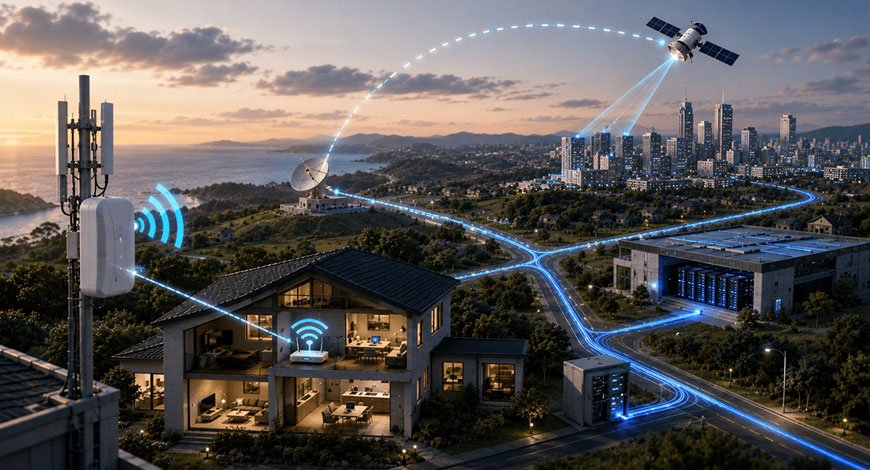
Fiber delivers fast access speeds, but true broadband quality—the full end-to-end experience across the infrastructure stack—depends on Wi-Fi performance, network routing, and proximity to content and compute infrastructure.
Key Takeaways:
- Access speeds only tell part of the story: A fast fiber connection doesn’t guarantee a good overall experience. Performance varies heavily based on local factors like in-home Wi-Fi equipment, connected devices, and network routing.
- Devices can be the bottleneck: Replacement cycles for smartphones and laptops are slowing down, meaning many users are running fast fiber through hardware that only supports older standards like Wi-Fi 5. But the router itself can be just as limiting. Many households are still running older Wi-Fi customer premise equipment (CPE) that acts as a bottleneck regardless of how fast the fiber connection coming into the home is.
- Location matters for latency: Physical distance from interconnection and peering points and cloud infrastructure creates significant regional performance disparities even where fiber is widely available, a factor that becomes especially pronounced for interactive applications like gaming and video conferencing.
- AI is raising the bar for networks: Interactive AI applications like real-time voice and video models are likely to be more demanding on the network than traditional streaming. Low latency, minimal jitter, and strong uplink performance are likely to be required, and users far from major network hubs will feel the gap more acutely.
- Satellite and FWA complement fiber: Neither technology is a serious competitor to fiber. Both are increasingly deployed to fill geographic gaps where fiber is difficult or costly to justify, and to provide backup connectivity when terrestrial networks go down. Some users choose satellite or fixed wireless access (FWA) for the simpler installation process or flexible short-term contracts, even where fiber is available.
- Resilience is now a selling point: The 2025 Iberian power outage highlighted how critical network resilience has become, with operators increasingly offering satellite backup as a tangible customer-facing feature even in markets with extensive fiber coverage.
Fiber has become one of the biggest connectivity success stories of the past decade. Across much of Europe, North America, and parts of Asia-Pacific, operators have invested heavily in fiber networks capable of delivering gigabit and multi-gigabit speeds to homes and businesses.
However, as fiber adoption continues to grow, operators are discovering that access speeds alone do not determine broadband quality. Users with similar fiber connections can have dramatically different experiences depending on factors such as in-home Wi-Fi performance, backbone routing, and the location of the services they use. As a result, attention is shifting away from the last-mile alone and toward everything else that shapes the end-user experience.
While fiber remains the foundation of modern broadband, the next phase of improvement will come from the technologies and infrastructure that surround it. For a deeper discussion of these trends from Ookla Research analysts and industry experts, check out our recent webinar, Fiber Is Not Enough: Wi-Fi CPE, Interconnection, and Satellite in the Broadband Quality Equation.
How Wi-Fi and home networking shape the broadband experience
Even the fastest broadband connection can be limited by the Wi-Fi environment connecting users to the internet. Older routers, older devices, poor coverage, and outdated Wi-Fi standards may prevent users from experiencing the full benefits of their broadband service.
Modern Wi-Fi technologies such as Wi-Fi 6, 6E, and 7 can deliver substantial performance improvements, but adoption of these newer standards varies considerably across markets. Ookla data shows significant differences across Europe in the use of newer Wi-Fi standards, even among countries with strong fiber deployment.
Connected devices add another layer of complexity. With replacement cycles lengthening across smartphones, laptops, and other hardware (including bandwidth-intensive smart TVs), many users are running newer routers and faster connections through devices that only support older Wi-Fi standards. After all, a multi-gigabit connection doesn’t mean much if the device connecting to it only supports Wi-Fi 5.
Providers are responding on multiple fronts, with advanced routers, managed Wi-Fi services, mesh networking solutions, as well as whole-home coverage guarantees designed to improve the customer experience.
Latency, routing, and interconnection matter more than many users realize
Broadband discussions often focus on download speeds, but many online activities depend just as heavily on latency. Online gaming, video conferencing, cloud applications, and emerging AI services all rely on traffic moving efficiently between users and the services they access. How well that traffic moves depends not just on the broadband connection itself, but on where content and cloud platforms are located and the routing decisions made to reach them, which can vary significantly across countries and providers.
Ookla research from Italy shows how much infrastructure location can affect real-world performance. Gaming latency varies significantly across regions despite widespread fiber availability, because users in the south are simply further from the interconnection points and digital infrastructure concentrated around Milan in the north.
Several variables influence how efficiently traffic moves across a network:
- Internet exchange points (IXPs): The number and location of IXPs can affect how efficiently traffic moves between networks.
- Peering arrangements: Direct connections between networks can reduce latency and improve performance.
- Cloud and content infrastructure: The location of cloud platforms and content delivery infrastructure can influence responsiveness.
- Routing efficiency: The paths traffic takes across the internet can affect latency and overall performance.
- Service location: Gaming platforms, streaming services, and AI applications may perform differently depending on where their infrastructure is located.
AI is raising the stakes for network latency
For much of the internet’s history, web browsing, email, and video streaming were the dominant use cases, and none of them depended heavily on latency. A few extra milliseconds rarely made a noticeable difference. AI is likely to change that.
As AI applications become more interactive, the demands they place on networks are shifting. Voice and video AI models and real-time collaboration tools all require traffic to move quickly and consistently between users and the infrastructure powering those services. While there is still uncertainty on where the balance will ultimately sit between on-device/local inference and heavier cloud workloads, several factors will shape how well networks handle that shift:
- Latency and jitter: Unlike streaming, interactive AI applications are more likely to be sensitive to even small delays and inconsistencies in network performance.
- Interconnection density: Users closer to major network hubs, cloud infrastructure, and inference capacity will likely have a better experience with latency-sensitive AI applications, and that proximity will matter more as AI use becomes more interactive in nature.
- Uplink performance: Unlike traditional use cases that drove network investment around download speeds, many AI applications place greater demands on upload performance, though how emerging AI use cases will ultimately shift the balance between upload and download demand remains uncertain.
- Geographic disparities: Users located far from major network hubs and cloud infrastructure are more likely to experience slower, less responsive AI applications as latency-sensitive use cases become more common.
Where satellite and fixed wireless fit alongside fiber
Satellite broadband is often framed as a competitor to fiber, but current usage patterns suggest the two technologies are more complementary than competitive. The same is true of fixed wireless access, which uses radio signals to deliver broadband without the need for physical cables. Rather than substitutes for fiber, both satellite and FWA are increasingly being used alongside existing broadband technologies to fill gaps that fiber has yet to reach.
In many markets, factors such as challenging terrain, dispersed populations, and infrastructure costs help determine where satellite and FWA are deployed. FWA can provide broadband quickly and cost-effectively in areas where fiber is difficult to justify, while satellite is increasingly used to reach the most remote locations and provide backup connectivity when terrestrial networks are unavailable.
Each broadband technology offers different advantages:
- Fiber: Delivers the highest levels of capacity and long-term scalability.
- FWA: Can provide broadband quickly and cost-effectively in certain locations, with flexibility on short-term contracts for seasonal usage.
- Satellite: Can reach areas where other technologies remain difficult to deploy, and can support network resilience by serving as backup connectivity when terrestrial networks are disrupted.
Network resilience is becoming a competitive differentiator
As broadband connectivity becomes increasingly important for work, education, entertainment, and public services, network resilience—the ability to stay connected during outages and disruptions—is receiving greater attention from operators, policymakers, and users.
Recent events have highlighted why resilience matters. In the wake of the 2025 Iberian power outage, which disrupted critical infrastructure across Spain and Portugal, operators and regulators have increased their focus on backup power, network autonomy, satellite redundancy, and other measures designed to keep users connected during large-scale outages.
For some operators, resilience is evolving from a back-office priority into a customer-facing feature, with satellite backup services emerging as a tangible example even in markets with extensive fiber deployment. As broadband has become critical infrastructure, the question for operators is no longer just how fast a network can go, but how quickly it can recover.
Some operators are already building products around network resilience. In the U.S., T-Mobile’s Super Broadband combines a terrestrial fixed wireless connection with Starlink to give enterprise customers a guaranteed failover option. In the UK, Vodafone offers a battery backup solution for residential customers who depend on their landline for emergency calls or telecare alarms. Both are early examples of operators turning network resilience into a billable service.
Looking beyond speed
The broadband industry has spent years focused on expanding fiber coverage and increasing access speeds, and while those investments remain essential, the user experience depends on far more than the access connection alone. Wi-Fi performance, connected devices, interconnection, routing, resilience, and technologies such as satellite and FWA all shape what users actually experience online. Ookla







You must be logged in to post a comment Login