
Headlines of the Day
PLI 2.0 boost likely for Dixon, Amber; limited upside seen
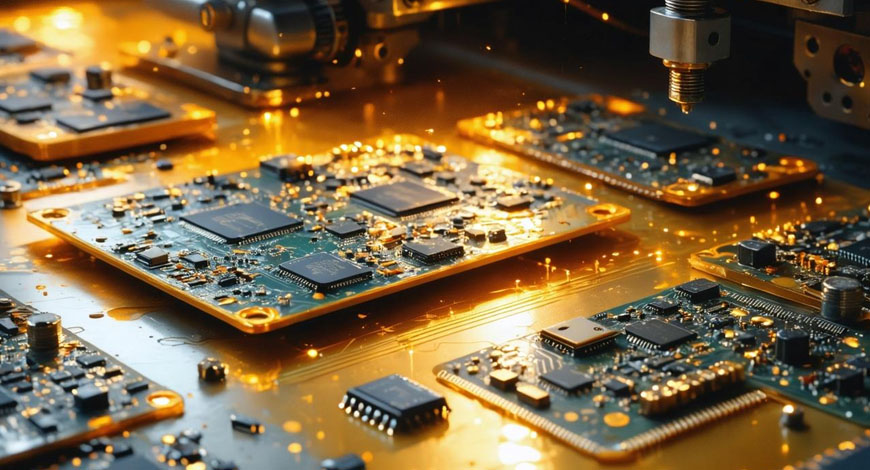
The central government has approved the Mobile Phone Manufacturing Scheme and Semicon 2.0. MPMS, with an outlay of ₹62,500 crore, is an extension of the Smartphone Production-Linked Incentive (PLI) 1.0, while Semicon 2.0, or India Semiconductor Mission (ISM) 2.0, with an outlay of ₹1.3 trillion, succeeds ISM 1.0.
While the objective of PLI 1.0 was to scale up domestic smartphone manufacturing, the second phase focuses on exports and increasing domestic value addition. PLI 1.0 helped make India the world’s second-largest mobile phone manufacturer, with production more than doubling from ₹2.1 trillion in 2019-20 to ₹5.5 trillion in 2024-25 (FY25). Mobile phone exports also rose eightfold to ₹2 trillion in FY25. However, the scheme fell short of its value-addition target, with local value addition reaching only 18-19 per cent against the targeted 35-40 per cent.
The second phase of the semiconductor mission aims to incentivise domestic production and develop the entire semiconductor value chain, reducing dependence on imported raw materials and machinery. Among listed companies, brokerages expect Dixon Technologies (India) to be the biggest beneficiary of the new schemes, followed by Amber Enterprises India.
Motilal Oswal Research believes both initiatives will strengthen supply-chain resilience, spur technological innovation, and position India as a global electronics manufacturing hub. The brokerage says incentives under the mobile phone scheme will enhance customer stickiness and improve margins, particularly for players such as Dixon. Analysts Teena Virmani and Prerit Jain expect Dixon and Amber to participate in MPMS and retain Dixon, Cyient DLM, and Syrma SGS as their top sector picks.
BNP Paribas believes India’s position in the global electronics manufacturing industry is likely to strengthen as semiconductor capabilities improve and domestic component sourcing rises. While success will depend on the execution capabilities of electronics manufacturing services (EMS) companies, their ability to forge partnerships and joint ventures, and secure regulatory approvals, analyst Nirransh Jain views the announcements as sentiment-positive for the Indian EMS sector. The brokerage expects Dixon and Amber, through its Oppo partnership, to be the primary beneficiaries of MPMS, supporting margin upside.
The scheme is expected to run from 2026-27 to 2030-31, offering incentives ranging from 2.25 per cent to 5 per cent on eligible sales. Companies can earn an extra 1.5 per cent incentive for sourcing key components domestically. The scheme also provides a 3 per cent incentive for design, research and development, with a focus on building indigenous brands.
Some brokerages, however, believe the upside for Dixon may not be as major as it was under PLI 1.0.
JM Financial Research observes that while PLI 1.0 lifted Dixon’s margins by about 60 basis points, industry dynamics have changed. Under PLI 2.0, Dixon will receive incentives on incremental sales over its 2025-26 base, when it manufactured 32 million smartphones, making the incentive pool relatively smaller, analysts Shalin Choksy and Jignesh Thakur said. They also said that the greater emphasis on exports, where competition is far more intense than in the domestic market, could alter the way incentives are shared across the value chain.
Jefferies Research also believes that although Dixon was the biggest beneficiary of PLI 1.0, competition is now much stronger than it was in 2021, when the original scheme was launched. Business Standard










You must be logged in to post a comment Login