
International Circuit
NGMN urges simpler 6G migration, warns against repeating 5G complexity
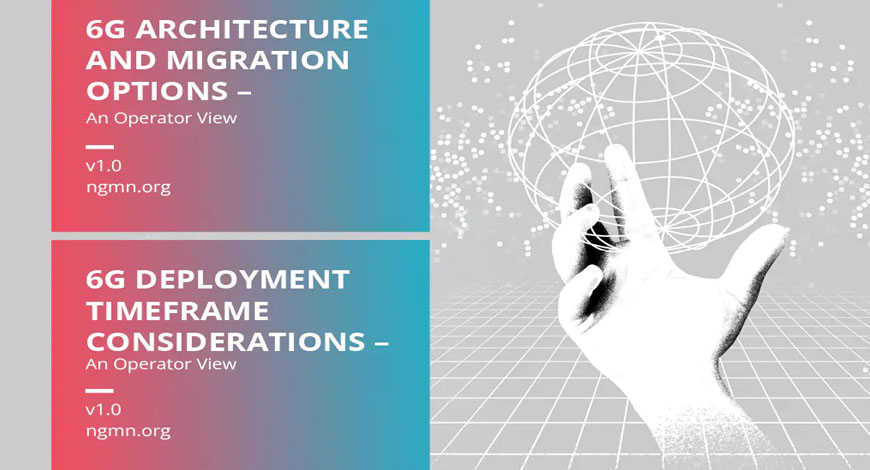
The Next Generation Mobile Networks Alliance (NGMN) has released two major operator-focused publications urging the global telecom ecosystem to converge early on simpler 6G migration paths, and to learn from the fragmentation and complexity that complicated 5G deployment.
The two new publications
Released on 2 June 2026 in conjunction with the 3GPP Plenary Meeting in Singapore (8–12 June), the two papers are:
- ‘6G Architecture and Migration Options, An Operator View’: Examines RAN and core network migration choices from 5G to 6G, arguing for narrowing options early to prevent market fragmentation and reduce long-term operational burden.
- ‘6G Deployment Timeframe Considerations, An Operator View’: Consolidates operator views on timing, emphasising that high-quality standards must be completed before commercial 6G capabilities are introduced, with deployment expected in the early 2030s.
The timing is deliberate, both papers arrive ahead of the June–September 2026 3GPP study phase, a decisive window for establishing the foundations of initial 6G deployments, and before 3GPP’s decision on Release 21, which will be the first announced 6G specification.
MRSS as the baseline migration path
At the heart of NGMN’s first paper is a clear preference for Multi-RAT Spectrum Sharing (MRSS) as the primary migration mechanism from 5G to 6G. MRSS allows different radio access technologies to coexist and share spectrum simultaneously, offering a less disruptive upgrade path compared to building parallel networks. However, NGMN acknowledges that MRSS still needs enhancement, particularly in efficiency beyond 4G–5G Dynamic Spectrum Sharing (DSS) and in extending support across both Frequency Division Duplexing (FDD) and Time Division Duplexing (TDD) spectrum bands.
Alternative approaches, Dual Connectivity and Dual Stack, were also analysed but should only be pursued if they address specific deployment gaps that MRSS cannot handle. This tiered approach is NGMN’s way of keeping the options menu short and manageable.
Lessons learned from 5G
NGMN’s core argument is rooted in a frank assessment of 5G’s troubled rollout. The early introduction of 5G Non-Standalone (NSA) mode created a migration maze, operators faced numerous deployment option combinations when eventually transitioning to Standalone (SA), driving up complexity, cost, and time-to-market. NGMN wants 6G to avoid that trajectory by aligning on a single primary migration path well before standards are locked in.
Guangyi Liu, Chief Expert of China Mobile and NGMN Board Director, captured the concern directly: “While flexibility is important, migration options need to be limited if we are to learn the lessons from 5G that hindered time-to-market. The current promise of MRSS as a migration path for 6G deployment is clear, but for this to be realised that means ensuring there is not unnecessary complexity on networks or devices.”
The deployment timing argument
The second paper pushes back against industry pressure for early commercialisation. NGMN’s operator members insist that simpler and better-defined first-release standards are more valuable than rushing feature-rich but incomplete specifications to market. Large-scale 6G deployment depends not just on the network infrastructure side, but on a broad base of compatible devices, and ecosystem readiness cannot be forced by premature standardisation.
Laurent Leboucher, Chairman of the NGMN Alliance Board and Orange Group CTO, framed the stakes plainly: “Dedicating sufficient time to this process is crucial, otherwise risking unnecessary complexity and long-term challenges, limiting the value to operators and end users.”
The architecture dimension
Beyond migration paths, NGMN also stresses that architectural decisions must align cost structures with realistic hardware reuse, support multi-vendor ecosystems, and enable cloud-based deployments for long-term operational efficiency. This echoes NGMN’s broader 2025 publication on network architecture evolution, which outlined 13 guiding principles for 6G including AI-native network management, on-demand feature deployment, and quantum-safe security, all framed around avoiding the complexity pitfalls of 5G.
Anita Döhler, CEO of NGMN, underscored the urgency: “Decisions of today around standardisation, including migration options, will shape the entire 6G ecosystem and determine its long-term success with regards to ability to deliver value to customers.”
Prepared by Deep Research.
CT Bureau


You must be logged in to post a comment Login