
Headlines of the Day
India enters new semiconductor era as CG semicon plant starts production
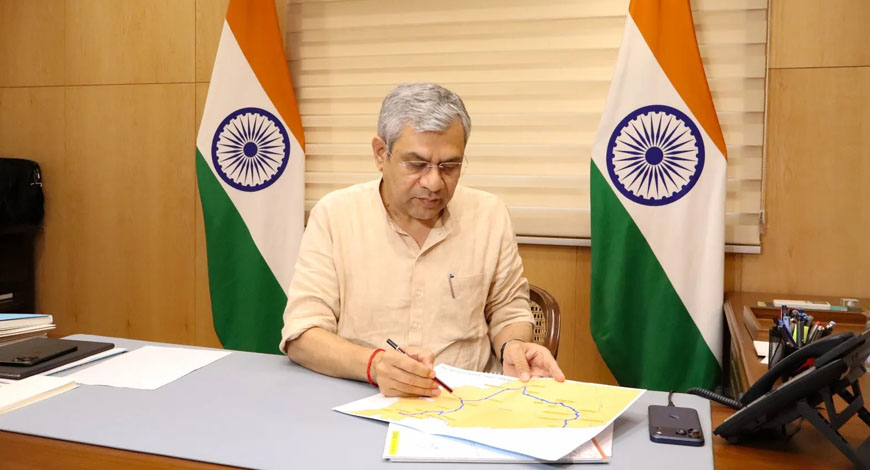
Union Minister for Railways, Information & Broadcasting, and Electronics & Information Technology, Ashwini Vaishnaw, said India has entered a new era in the semiconductor sector, as the CG SEMI (OSAT) facility in Sanand, Gujarat commenced commercial production, becoming the country’s third semiconductor plant to do so this year.
The Sanand unit, built with an investment of over ₹7,600 crore in partnership with Japan’s Renesas Electronics, becomes the third semiconductor facility in the country to enter commercial production in 2026. The rapid transition from groundbreaking in March 2024 to operations in just over two years highlights accelerated execution within India’s emerging chip manufacturing ecosystem. Chips produced at the facility will cater to automotive and industrial applications, with both domestic supply and exports to key global markets including the US, Europe and Japan.
With three of the 12 approved semiconductor projects now operational and two more expected shortly, India is on track to have five functional units by the end of the year. The ecosystem build-out spans fabrication, assembly, testing and packaging, supported by a growing design base that includes over 24 deep-tech startups, a trained talent pool of more than 70,000 engineers, and semiconductor-related programmes across 300-plus universities. Parallel progress on the country’s first fabrication plant in Dholera and the rapid expansion of electronics manufacturing, now approaching ₹13 lakh crore in value, signal broader industrial alignment.
The latest developments coincide with the government’s approval of an estimated ₹1.25 lakh crore for ISM 2.0, a sharp increase over the initial ₹76,000 crore allocation. The enhanced funding reflects the strategic importance of semiconductors amid global supply chain realignments and geopolitical competition. Investments approved so far exceed ₹1.6 lakh crore, with participation from global and domestic players across fabs and OSAT facilities.
Policy focus is expected to shift from approvals to scale and sustainability. Support for capacity expansion, continued incentives for design-led innovation, and stronger domestic demand through public procurement in sectors such as defence, railways and power systems are likely to be critical. India’s manufacturing roadmap remains anchored in mature nodes such as 28nm, which underpin high-volume applications including automotive electronics, 5G devices and industrial systems, offering a pragmatic entry point into global value chains.
At the same time, structural challenges persist. Semiconductor manufacturing requires sustained capital, access to critical minerals, advanced equipment and deep technical capabilities. Strategic partnerships and supply chain diversification initiatives will be essential to mitigate external dependencies, while long-term public funding will be needed to crowd in private investment. Estimates suggest India may require investments of $135–180 billion over the next decade to build a globally competitive semiconductor ecosystem.
CT Bureau









You must be logged in to post a comment Login