
Trends
AI demand for high-end MLCCs drives Japan and Korea suppliers
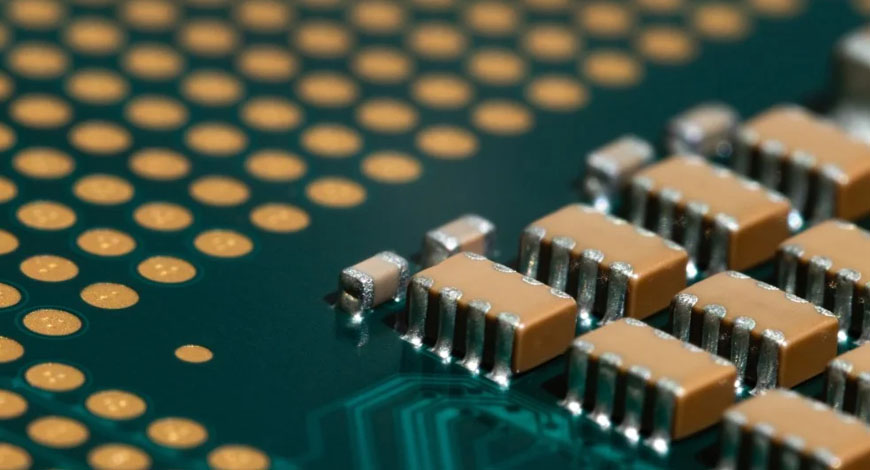
TrendForce’s latest MLCC industry research indicates that accelerating AI server platform upgrades and the continued volume growth of custom ASICs developed by CSPs have significantly boosted demand for high-end MLCCs.
By late June 2026, the book-to-bill (BB) ratios of the three leading Japanese and Korean suppliers—Murata, Samsung Electro-Mechanics (SEMCO), and Taiyo Yuden—had risen to 1.30, 1.31, and 1.25, respectively, marking their highest levels since the COVID-19 pandemic. The MLCC industry’s overall BB ratio also climbed to 1.04.
Notably, Murata’s financial results for the first quarter of 2026 showed its orders-to-backlog ratio reaching 1.27, surpassing the previous peak of 1.25 recorded at the onset of the industry’s most severe MLCC shortage in 2018. This indicates that order backlogs are accumulating rapidly, pointing to an elevated risk of supply shortages.
TrendForce notes that MLCC demand remains highly polarized. In the U.S., the Consumer Price Index (CPI) rose 4.2% YoY in May, with persistently high interest rates continuing to dampen consumer purchasing power and weighing on demand for smartphones and notebooks.
Meanwhile, Intel and AMD have prioritized CPU production for AI applications and reduced supply for conventional PCs. This has forced ODMs to procure components through urgent spot orders, which has further driven up material costs. In contrast, demand for high-capacitance, low-voltage, and miniature MLCCs continues to surge, supported by the volume ramp of custom AI accelerator platforms such as Google TPU, AWS Trainium, and Meta MTIA.
On the supply side, the crowding-out effect from AI-oriented high-end MLCC production has begun spilling over into both the automotive and consumer markets. Apple’s supply chain started inventory preparation one to two months earlier than usual. At the same time, automotive ODMs advanced procurement from July to May, reflecting growing concerns over potential supply shortages in the second half of the year.
In China, distributors began raising prices for mainstream X5R consumer-grade MLCCs in June, with average increases ranging from 15% to 25%, further fueling market concerns. As Japanese and Korean manufacturers continue to prioritize high-end AI-related MLCC orders, TrendForce expects Taiwanese and Chinese suppliers, including Yageo, Walsin Technology, and Viiyong, to benefit from spillover demand for medium- to high-capacitance consumer-grade X5R MLCCs in the third quarter.
Looking ahead to the second half of 2026, TrendForce expects capacity utilization to remain heavily occupied by AI-related orders as new AI platforms from NVIDIA, Google, and AMD enter mass production during the third quarter. Combined with customers’ early inventory-building efforts, this is likely to extend lead times and drive further price increases for high-end MLCCs. The fourth quarter is therefore expected to be the critical period for determining whether the high-end MLCC market transitions into a full-fledged supply shortage. TrendForce









You must be logged in to post a comment Login