
Headlines of the Day
India, Japan seal $12.5B deals with semiconductor focus
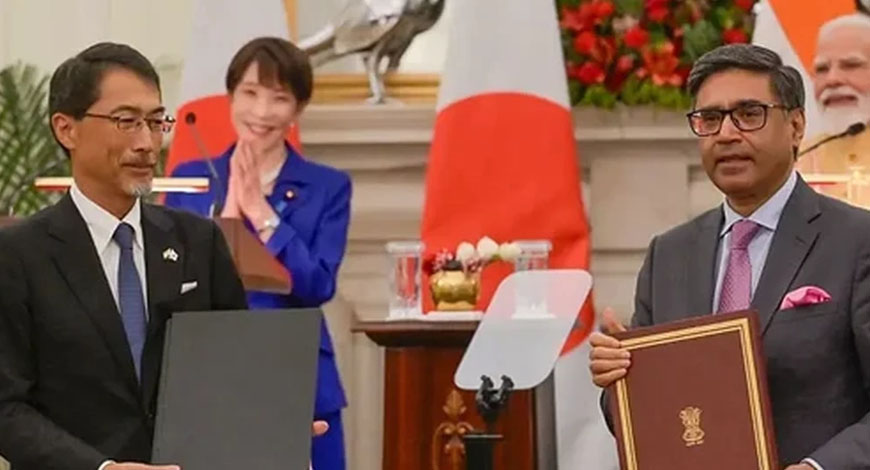
About $12.5 billion in Japanese investments will flow into India across 120 new agreements, with semiconductors a central focus.
Chip ecosystem boost: Projects from Fujifilm, Toho Koki and others will expand India’s semiconductor manufacturing, research and supply chain resilience.
Strategic Indo-Pacific ties: The deals strengthen India-Japan cooperation in economic security, technology and clean energy under a broader Indo-Pacific strategy.
Massive bilateral investment signals tech shift
At the 16th India-Japan Annual Summit, both nations announced nearly ₹1 lakh crore ($12.5 billion) in new investments spanning semiconductors, AI, green energy, and infrastructure. The agreements, signed during PM Sanae Takaichi’s first official visit, mark a pivot from traditional sectors like automobiles toward strategic technology industries. This reflects Japan’s drive to diversify supply chains and India’s ambition to become a global electronics hub.
Semiconductors emerge as the anchor sector
Over 100 Japanese companies are exploring opportunities in India’s semiconductor ecosystem, from manufacturing to R&D collaborations. Key projects include Fujifilm’s proposed semiconductor materials facility in Gujarat’s Dholera and partnerships with IIT Guwahati and Toho Koki. This push aims to localise critical chip components, strengthen domestic value addition, and reduce reliance on imports while integrating India into global chip supply chains. Business Today + 4
Strategic cooperation targets economic security and technology
The summit reaffirmed the Special Strategic and Global Partnership, with leaders emphasising cooperation in economic security, resilient supply chains, and advanced technology. Joint initiatives include AI infrastructure development, clean energy projects, defence technology co-development, and maritime security collaboration under Japan’s Free and Open Indo-Pacific initiative. The breadth of agreements signed reflects a rapid expansion of bilateral engagement across these strategic areas.
Future scenarios for India-Japan tech corridor
If implemented effectively, these investments could create an end-to-end technology corridor linking Japanese semiconductor expertise with India’s manufacturing scale, positioning both as key Indo-Pacific chip players. Alternatively, delays in regulatory alignment or supply chain integration could slow momentum, risking missed opportunities amid global competition. The next 2–3 years will be critical in translating agreements into operational facilities and tangible economic gains. MSN









You must be logged in to post a comment Login