
Headlines of the Day
Governments bet on 6G by 2029, Jefferies flags telco reluctance
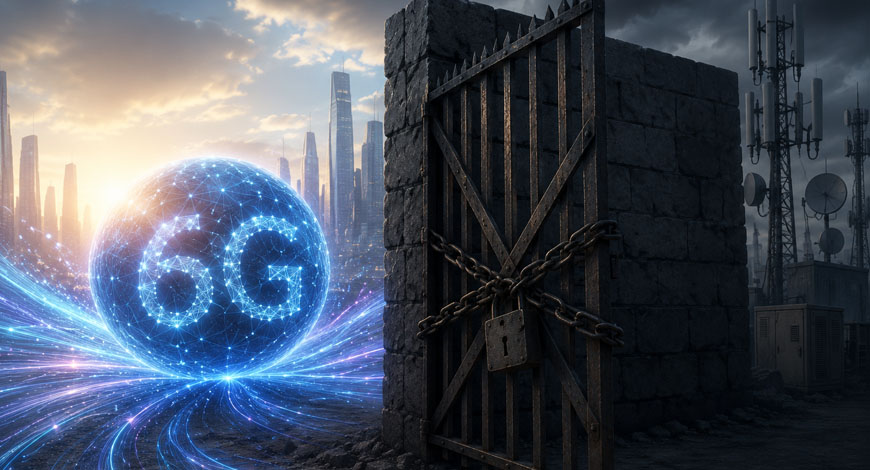
Governments across the globe are excited about the possibility of 6G by early 2029, but telecom companies remain lukewarm.
Little to no commercial use-case viability, insufficient returns on earlier technology investments like 5G, and the dilemma of integrating 6G with AI without hiking CapEx garner a muted response from telcos toward the 6G launch, as per a Jefferies report.
“6G will finalize in 1Q29, but our checks indicate telcos are lukewarm… Governments such as the US, Japan & China are likely much more keen as part of the national competition. Equipment makers are mixed as Huawei/ZTE would likely still lead in patents but constrained by semiconductor,” said the brokerage firm in its research note.
The mobile broadband standard ‘Third Generation Partnership Project’ (3GPP) in June said it aimed to start building 6G trial networks in the second half of 2028, and start 6G operations in the latter half of 2029. Considering China launched 5G services in Nov 2019 and the 10-year development cycle of wireless tech, commercialising 6G in 2029 seems reasonable, according to the report. Developed countries in the West see it as an opportunity to regain leadership in the telecom market after losing out to China in 5G.
ROI expectations
Despite the ambitious timeline, telcos globally have not responded to the developments with the same enthusiasm, largely because of past experiences with 5G. When first introduced, the technology was expected to deliver a strong ROI, given its high data speeds, low latency, and connectivity. However, few countries other than China have built nationwide 5G standalone networks.
In India, 5G rollout began four years ago, but even the government initiatives for widespread use cases have remained in the test labs. Telcos developed their own methods to monetise 5G slicing, such as Bharti Airtel’s ‘Priority Postpaid.’ However, even that faced backlash from the government and the public. Even in China’s case, it was said that the telcos built “low-spec” network equipment, such as 5G base transceiver stations (BTSes), to save CapEx.
CapEx costs
In such a scenario, commercial use cases for 6G are fewer still. The viable 6G capabilities are integration with satellites to provide seamless land-, sea-, and air-based communications, and AI-driven or AI-native solutions. These will come with higher costs that consumers are unlikely to pay, particularly in cost-conscious markets like India. In on-device AI for smartphones, CapEx is already high owing to higher processor and memory demands.
“If we move AI from devices to the wireless BTSes, we would need more processing power and memory at the BTSes, much more bandwidth and much higher power consumption. Network CapEx/opex would have to skyrocket. Since telcos are not AI labs, they cannot justify the high CapEx,” said Jefferies.
In India, telcos acquired around 51,236 MHz of 5G spectrum in 2022 and another 141.4 MHz in 2024, at a cost of ₹1.61 lakh crore, as per government estimates. Jio Infocomm and Airtel continue to propose potential commercial use cases, while Vodafone Idea is still rolling out 5G services across India. The Hindu BusinessLine












You must be logged in to post a comment Login