
International Circuit
Korean telcos unveil AI transformation at MWC 2026
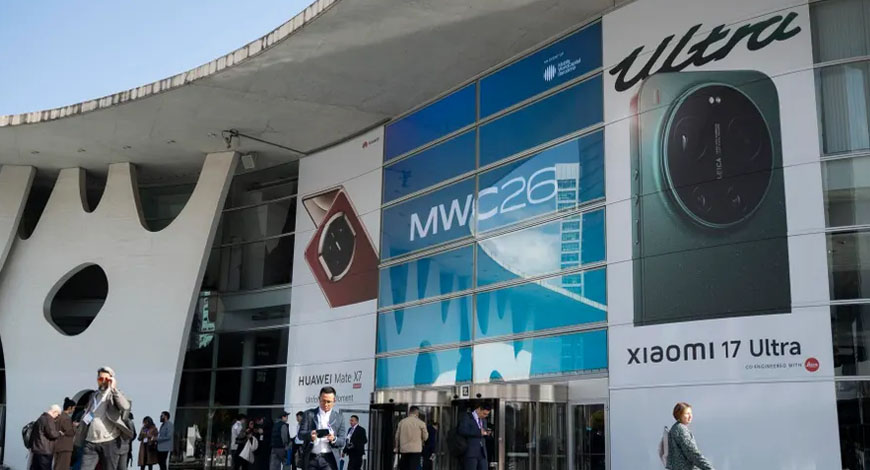
South Korea’s largest telecommunications companies used this year’s Mobile World Congress in Barcelona to declare a sweeping transformation: They no longer see themselves primarily as network operators but as artificial intelligence companies.
At the annual industry gathering, widely regarded as the world’s largest mobile technology exhibition, executives from the country’s three major carriers — SK Telecom, KT and LG Uplus — each outlined ambitious plans to embed AI at the center of their business models.
The announcements reflected a broader shift across the global telecommunications industry since the explosion of interest in generative AI following the debut of ChatGPT in 2022. This year’s event underscored how deeply AI is becoming integrated into the sector’s identity and future strategy.
SK Telecom, the country’s largest carrier, said it would accelerate its transformation into an AI-focused company by restructuring its infrastructure and making large-scale investments in artificial intelligence technologies.
“Our pride as the leading telecom operator is no longer enough,” said Chief Executive Jung Jae-heon during a press briefing at the event. “The existing business model alone cannot secure leadership in the AI era.”
The company plans to develop AI-powered telecommunications services and build a network of large-scale AI data centers with a combined capacity exceeding one gigawatt nationwide. It is also working with Nvidia and SK hynix on research related to AI-driven networks for the future 6G era.
KT, meanwhile, framed the next generation of wireless networks as a foundation for AI infrastructure rather than simply faster connectivity.
The company said it aims to redesign core network systems with ultra-low latency to connect devices, wireless networks and AI data centers. It is also developing a “semantic transmission” approach that sends only the most relevant information rather than entire datasets, a method designed to support AI-driven communications in the 6G era.
KT also unveiled a platform called Agent Builder that allows users to design AI agents through a drag-and-drop interface without writing code, tapping into the growing “no-coding” movement in software development.
LG Uplus took a different approach, emphasizing voice-based AI interaction as a central technology. Chief Executive Hong Bum-sik, the only Korean telecom leader invited to deliver a keynote speech at the conference, presented the company’s “human-centered AI” vision, known as IXIO.
The system is designed to use voice as a primary interface between people and artificial intelligence, offering functions such as contextual conversation analysis, voice phishing detection and real-time information retrieval.
LG Uplus plans to expand the technology into a broader AI platform connecting devices ranging from smart glasses and autonomous vehicles to Internet of Things systems and humanoid robots.
Together, the strategies signal a decisive move by South Korea’s telecom operators beyond traditional smartphone-based services toward AI infrastructure and software platforms.
The shift was echoed by major telecom companies around the world at the event.
China’s three largest carriers — China Mobile, China Telecom and China Unicom — jointly announced an initiative with the Global System for Mobile Communications Association to transform mobile networks into intelligent, adaptive systems.
China Telecom’s president, Liu Guiqing, said the company was transitioning from a traditional telecom operator to a technology-driven enterprise, developing proprietary AI platforms and models built on integrated strengths in computing power, algorithms and data.
China Mobile demonstrated a computing-network integration technology capable of maintaining more than 98 percent AI training efficiency across distances of more than 100 kilometers.
European operators also highlighted AI-driven services. Deutsche Telekom outlined plans to integrate AI across its entire portfolio, from telecommunications networks to cloud services and smart-home platforms. Its subsidiary T-Mobile demonstrated an AI assistant called Magenta AI designed for telecom users.
France’s Orange presented a wildfire monitoring and response system that uses AI and 5G network slicing to predict and track fires.
Taken together, the announcements suggest that the telecom industry worldwide is entering a new phase, one in which networks are no longer seen merely as channels for data but as the backbone of the artificial intelligence economy. Korea Bizwire






You must be logged in to post a comment Login